
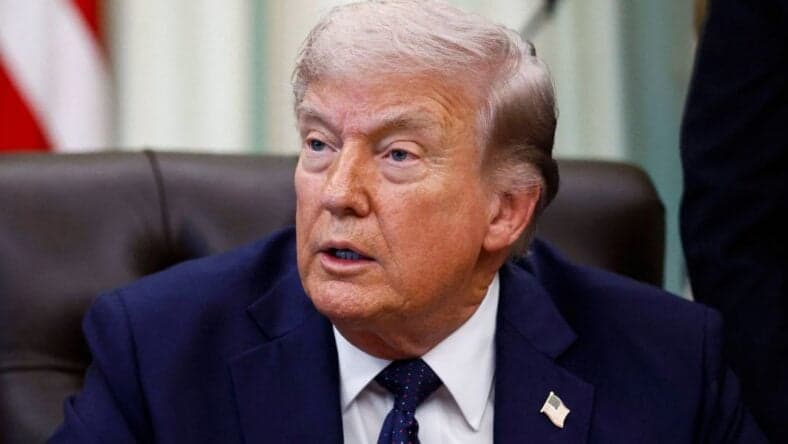
Donald Trump is renewing his push for a controversial White House ballroom project to move forward.
The president is reportedly seeking $1 billion in broader White House security funding as his administration fights to restart work on the stalled project, which would replace the East Wing and has faced legal roadblocks from preservationists.
Through acting Attorney General Todd Blanche, Trump’s team described the ballroom as “urgent,” citing recent security concerns around the White House as part of its latest court argument.
Donald Trump’s Ballroom Price Tag Balloons To $1 Billion
Trump’s plan to build a new ballroom at the White House hit a legal roadblock months ago, but the president does not appear to see that as the end of the road, per Al Jazeera.
In recent weeks, the billionaire mogul has sought up to $1 billion in funding from Congress, despite the project not yet receiving final approval and a previous court ruling ordering a pause on demolition of the East Wing, where the ballroom would be located.
The move appears to contrast with Trump’s earlier claims that the ballroom would be funded entirely through private donations, although it remains unclear where those donations were expected to come from.
The initial estimated cost of the project was around $200 million before reportedly rising to $400 million and now up to $1 billion, raising concerns that taxpayer funds could be used despite Trump’s earlier claims.
Trump Cites Security In Ballroom Court Fight
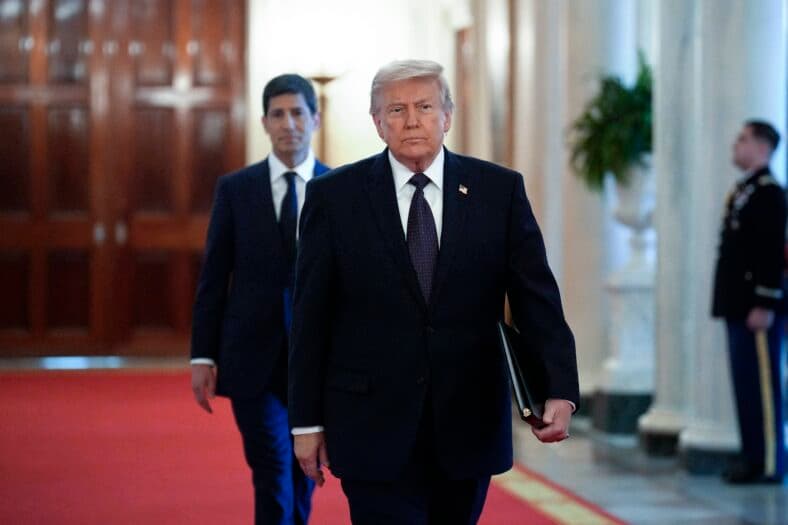
While seeking additional funding for the ballroom, the president has also pushed for the legal roadblock to be removed in a new filing submitted by acting AG Blanche.
“This suit, which is a complete embarrassment to our Country, must be dismissed,” Blanche wrote in the filing, co-signed by Principal Associate Deputy Attorney General R. Trent McCotter. “This is a terrible, tremendously harmful case to the United States of America, and all it stands for!”
Defending the request, Blanche cited the recent attack on a White House security checkpoint in Washington, D.C., involving 21-year-old suspect Nasire Best, as well as another attack targeting high-profile figures during the White House Correspondents’ Dinner.
He claimed the incidents underscored “the critical need for top-level, state-of-the-art security at the White House, including the ballroom.”
Donald Trump Team Says Ballroom Would Boost Security
Elsewhere in the filing, Blanche laid out several reasons why the administration believes the ballroom is needed.
“The Ballroom’s rooftop will serve a crucial strategic function for the security of the entire White House complex and beyond, including a drone port and key location for rooftop snipers who will protect the White House and the entire Washington, D.C. area, as a whole,” Blanche wrote.
He also argued that the ballroom would provide “a highly secure space” for future inaugurations and major events, such as the recent visit of the King and Queen of the United Kingdom and the expected September visit of Chinese President Xi Jinping.
According to Blanche, the absence of the ballroom currently forces the White House to rely on tents on the South Lawn, which he described as vulnerable to various threats. He also claimed the tents are susceptible to water damage and flooding during moderate rainfall.
Nonprofit Said Donald Trump Skipped Required Review
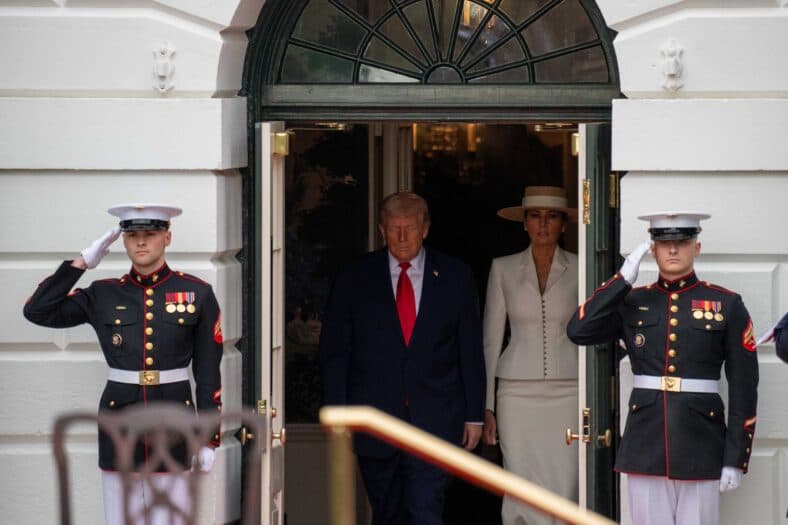
The legal injunction stopping construction on the ballroom was issued on March 31 by federal Judge Richard Leon after the National Trust for Historic Preservation filed a lawsuit late last year.
In its filing, the nonprofit claimed that neither Trump nor any other president is “legally allowed to tear down portions of the White House without any review whatsoever.”
“And no president is legally allowed to construct a ballroom on public property without giving the public the opportunity to weigh in,” the filing further read, per ABC.
The nonprofit also claimed that Trump failed to seek the necessary approvals before beginning the project, including filing with the National Capital Planning Commission, as required by law, and seeking approval from Congress.
Judge Said Security Exception Had Limits
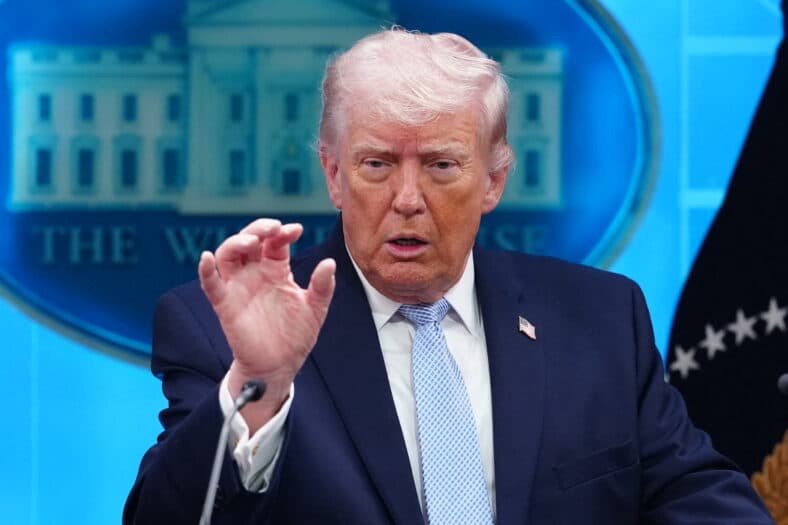
In his March 31 ruling, Leon restricted all construction related to the ballroom but allowed “actions strictly necessary to ensure the safety and security of the White House and its grounds” to continue.
The White House later responded by arguing that the ballroom must proceed, claiming that halting the project would leave the Executive Mansion “open and exposed” and create “grave national-security harms” to the building.
Leon subsequently issued another ruling, criticizing the White House for attempting to “turn this exception on its head” while clarifying the scope of the injunction.
He stated that “below ground construction may proceed,” along with any “above-ground construction strictly necessary to cover, secure, and protect such facilities.”