Autumn Renae Responds After Viral Chart Sparks Culture War
By Chukwudi Onyewuchi on January 26, 2026 at 4:30 PM EST




A single chart comparing online spending habits has ignited a heated cultural debate, dragging OnlyFans creators, tech platforms, and legacy media into the spotlight.
At the center of the uproar is Autumn Renae, a top-performing creator who refuses to retreat amid backlash.
Instead, she is using the moment to defend her work, explain the economics behind it, and challenge critics head-on.
Autumn Renae Pushes Back After Chart Goes Viral
Cry louder. It pays my rent. 😘 https://t.co/mHm0XgtoWL
— autumn renae (@autumrenaee) January 24, 2026
The controversy began when a graphic shared by investor Julian Klymochko went viral across social media.
The chart claimed U.S. consumers were spending more money on OnlyFans than on ChatGPT and The New York Times combined.
Klymochko labeled it “a sad, sad chart,” a phrase that quickly fueled outrage, mockery, and moral panic online.
Autumn Renae did not hesitate to respond. Rather than distancing herself from the comparison, she embraced it.
Reposting the chart to her followers on X, she fired back with a blunt message aimed at critics: “Cry louder. It pays my rent,” punctuated with a kiss emoji.
The post quickly circulated, amplifying her voice in a debate that had already spiraled beyond the original data.
Autumn Renae Explains Her Position On Capitalism And Demand
View this post on Instagram
In exclusive comments to The Blast, Renae made it clear she felt no obligation to soften her stance.
She framed the backlash not as a moral reckoning, but as a misunderstanding of how markets work.
“If someone’s upset that adult creators are making more than AI subscriptions or newspaper paywalls, that’s their problem, not mine,” she said. “This is how capitalism works. We’re meeting demand.”
Her remarks struck a nerve in a discussion that had increasingly shifted from numbers to values.
While critics framed the chart as evidence of cultural decline, Renae positioned it as proof of consumer choice.
From her perspective, outrage over spending priorities says more about discomfort with adult creators than about economics.
Data Behind The Debate And Autumn Renae’s Strategy
Fueling the argument further was a large-scale study conducted by OnlyGuider and OnlyTraffic.
The analysis examined 58.9 million OnlyFans transactions across more than one million subscribers.
The findings complicated the viral narrative. Only 4.2 percent of subscribers spent any money at all, but those who did averaged $48.52 per creator. The top 0.1 percent of creators dominated revenue, earning an average of $146,881 per month.
The study also revealed that nearly 70 percent of total revenue came from messaging, highlighting the role of direct interaction rather than passive subscriptions.
Renae said those numbers closely mirror her own approach. “Most people don’t spend a dollar, and that’s fine. I’m not chasing everyone. I focus on the small percentage who know my value,” she explained. “You don’t need millions of fans to win. You need loyal ones.”
Her comments reframed the discussion from mass appeal to targeted engagement, suggesting that success on the platform is less about scale and more about connection.
Online Backlash Splits Opinion Across Social Media
As the chart spread, reactions online became increasingly polarized.
Some users challenged the data outright, while others used it to ridicule both traditional media and emerging tech platforms.
One commenter scoffed, “Who the hell spends money on the New York Times?”
Another expressed disbelief at the premise entirely, writing, “Does anyone else not believe this? I literally don’t know a single person who gives a penny to OnlyFans.”
The debate soon expanded beyond numbers, morphing into a broader argument about morality, labor, and whose success is considered acceptable.
Critics framed the trend as troubling, while supporters saw it as long-overdue recognition of digital labor that has long existed on the margins.
Renae Says Outrage Only Fuels Growth
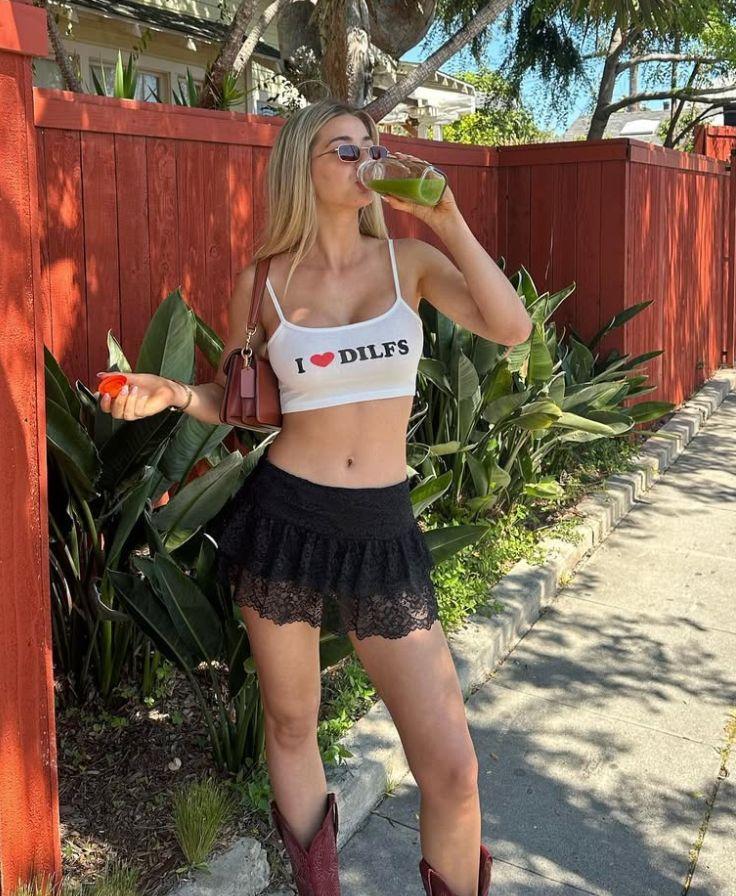
Despite the noise, Autumn Renae insists the backlash has only strengthened her position.
She believes criticism drives curiosity, and curiosity drives subscriptions. “Every time someone whines, another subscriber signs up,” she said. “You can hate it, or you can learn from it. But we’re not going anywhere.”
Other creators echoed that sentiment. Fellow OnlyFans star Britney Quinn jumped into the conversation with a blunt show of support, replying, “Haha, keep crying, I’ll keep enjoying the show.”
While some questioned the chart’s framing, noting that it was based on indexed monthly spending rather than time spent, the attention itself proved impossible to ignore.
Renae also pointed to what she sees as a double standard in how success is judged.
“When CEOs or YouTubers make millions, no one bats an eye,” she said. “But when women monetize their image and time, suddenly it’s the end of civilization?”
She remains unapologetic about her career and its impact. “This platform changed my life,” Renae said. “I’m not ashamed of that. I’m proud of it.”