A Woolly Mouse Is Stealing Christmas Thanks To Science
By Chukwudi Onyewuchi on December 24, 2025 at 4:00 PM EST




Colossal Biosciences and its woolly mouse are bringing holiday magic to the lab this year, blending festive storytelling with breakthrough science in an unexpected way.
In a whimsical Christmas video, the biotech company turns a major genetic milestone into a cozy seasonal moment.
The result is a heartwarming introduction to a tiny creature carrying enormous scientific significance.
A Woolly Mouse Celebrates His First Christmas
The holiday season arrived early inside Colossal Biosciences’ labs with the release of a festive short film shared exclusively with PEOPLE.
Inspired by A Visit from St. Nicholas, the video reimagines the classic poem from the perspective of a very busy woolly mouse experiencing Christmas for the first time.
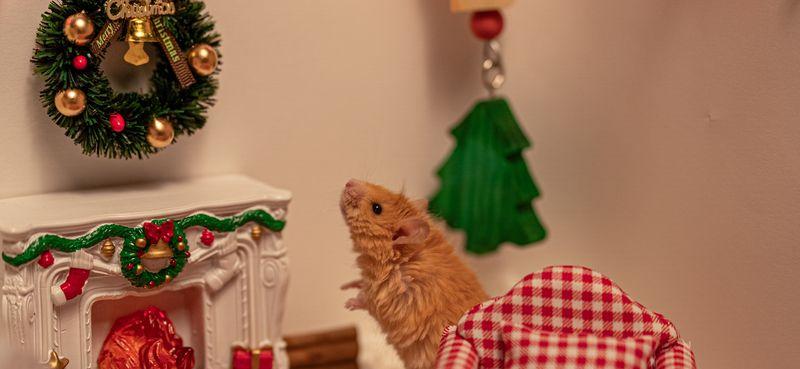
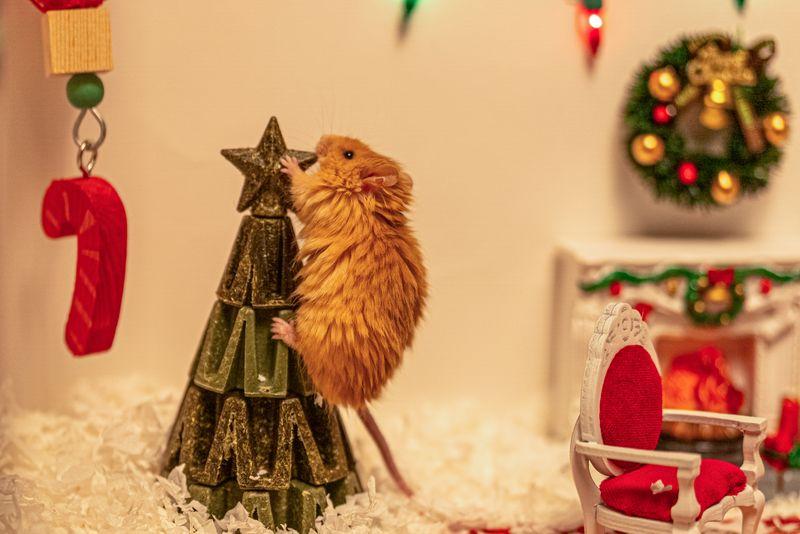
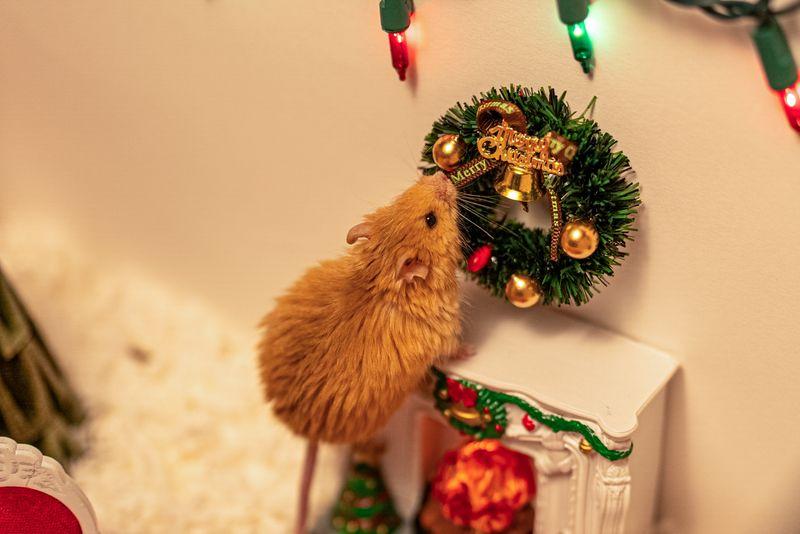
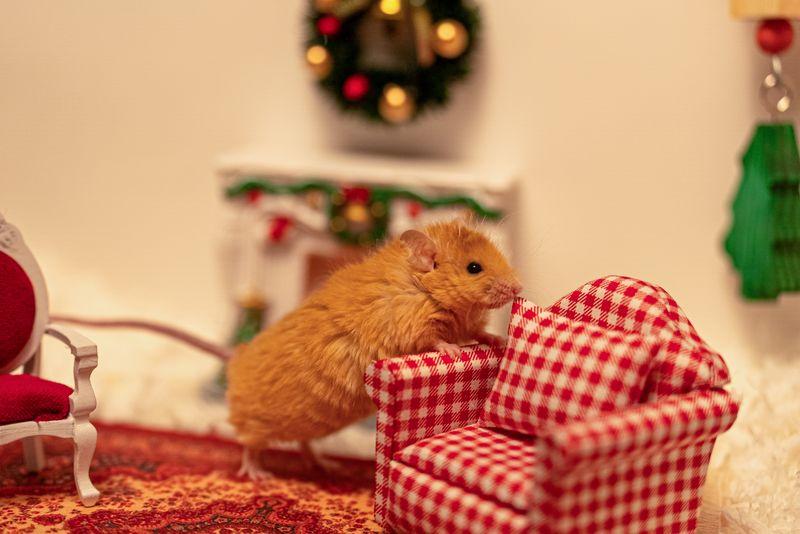
Inside a warmly decorated home, the mouse darts past stockings, climbs a glowing Christmas tree, and pauses to admire a wreath hanging above a miniature fireplace.
The tone is playful and storybook-like, but the star’s appearance immediately sets him apart.
Unlike a typical lab mouse, he sports longer, thicker, curlier fur reminiscent of traits once found on prehistoric woolly mammoths.
The video leans into that contrast, merging cozy visuals with scientific wonder before closing on a cheerful message to viewers: “From Colossal’s lab to your wintry nights, happy holidays to all … and to all woolly mice.”
Released alongside an updated holiday song from Colossal, the video transforms a complex scientific achievement into something accessible, charming, and surprisingly emotional.
The Science Behind The Woolly Mouse
Behind the festive visuals lies one of Colossal’s most talked-about milestones.
Earlier this year, the company introduced the woolly mouse as a proof point in its ambitious mission to restore traits of the long-extinct woolly mammoth.
While there was never a historical woolly mouse, researchers intentionally chose mice for their practicality and speed.
Elephants, the mammoth’s closest living relatives, have a 22-month gestation period and take years to mature, making them impractical for early testing.
Mice, by contrast, have a gestation period of roughly 20 days, allowing scientists to rapidly study how specific genes translate into physical traits.
“I’m excited,” Colossal’s chief science officer Beth Shapiro told PEOPLE in an exclusive interview in March.
She described the mouse as “really our first validation” that the company can successfully create living animals with mammoth-inspired genetic traits.
“It’s the first time that we’ve succeeded,” she added.
Why Woolly Mouse Traits Matter
The woolly mouse was engineered with multiple cold-adapted characteristics using mammoth gene orthologs.
These include curlier hair similar in color to mammoth remains found in permafrost, along with genes linked to fat metabolism.
Together, the traits mirror adaptations that once allowed mammoths to survive in frigid, resource-scarce environments.
During her March interview, Shapiro explained that researchers would continue observing the mice to see if they are “actually happier in cooler environments,” as intended.
According to a spokesperson, the woolly mice are currently “thriving and doing great,” a reassuring update for both scientists and fans who have followed the project closely.
For Colossal, the woolly mouse represents far more than a seasonal novelty.
It is a controlled demonstration of how genotype can influence phenotype, providing confidence that similar techniques could eventually be applied to larger, more complex animals.
Colossal Biosciences Blends Science And Storytelling
Colossal’s ability to capture public attention goes beyond genetic engineering.
The company has become known for pairing cutting-edge science with pop-culture-friendly storytelling that invites curiosity rather than intimidation.
The woolly mouse Christmas video is a clear example of that approach, turning a lab achievement into a narrative moment people want to share.
Colossal Biosciences co-founder Ben Lamm underscored the broader implications in an exclusive chat with The Blast, saying, “The woolly mouse is an early demonstration of what’s possible when advanced genetic engineering is applied thoughtfully. While it’s small in size, the implications for conservation research and de-extinction science are substantial.”
That philosophy has guided several of the company’s recent public moments.
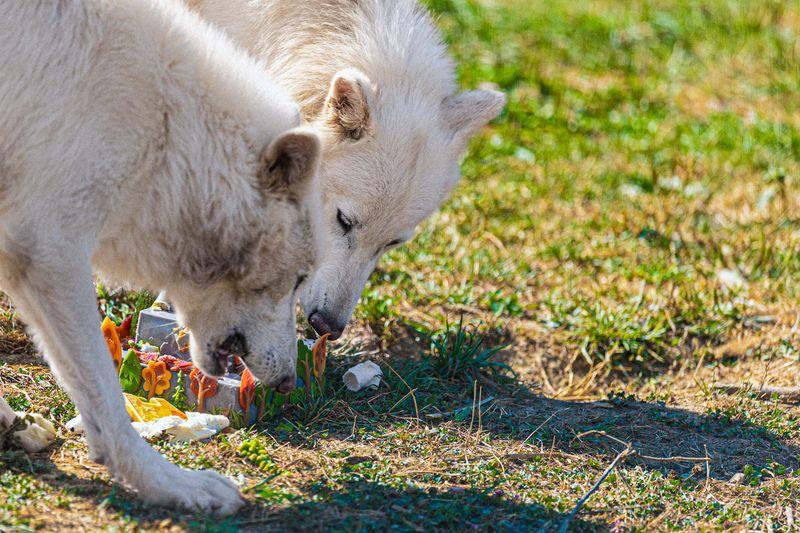
In October, Colossal celebrated the first birthday of its de-extinct dire wolves, Romulus and Remus.
The event featured a dog-friendly cake and a music video written by Emmy Award–winning musicians Stan Bush and Lenny Macaluso.
The Future Beyond The Woolly Mouse
Beyond mammoths, Colossal is making progress on dodo bird and thylacine, or Tasmanian tiger, projects.
Each effort is framed not as spectacle, but as a tool for conservation, resilience, and ethical reflection.
The woolly mouse fits squarely within that framework, serving a specific purpose rather than an open-ended experiment.
As for the woolly mice themselves, their role is limited but meaningful.
“This is not a project that will go on indefinitely. It served a purpose of testing genotype to phenotype, which we got positive results,” Sara Ord, Colossal’s director of species restoration, previously told PEOPLE.
For now, the woolly mouse is enjoying his moment in the holiday spotlight.
Wrapped in twinkling lights and scientific possibility, he represents a rare intersection of warmth and wonder, proving that even the smallest creatures can make a big impression when science meets storytelling.